The many faces of the tech leader: navigating IT governance and strategic vision
Decode Future Scenarios
Industrial and service sectors
JAKALA
2025
CHALLENGE
CIOs, CTOs, and other technology leaders face evolving challenges: managing the technology-business relationship, driving digital transformation, shaping customer vision, and leading internal reorganization. Their role has shifted from managing IT infrastructure to redefining technology's strategic role across the organization, requiring them to balance forward-thinking vision with complex organizational transitions.
SOLUTION
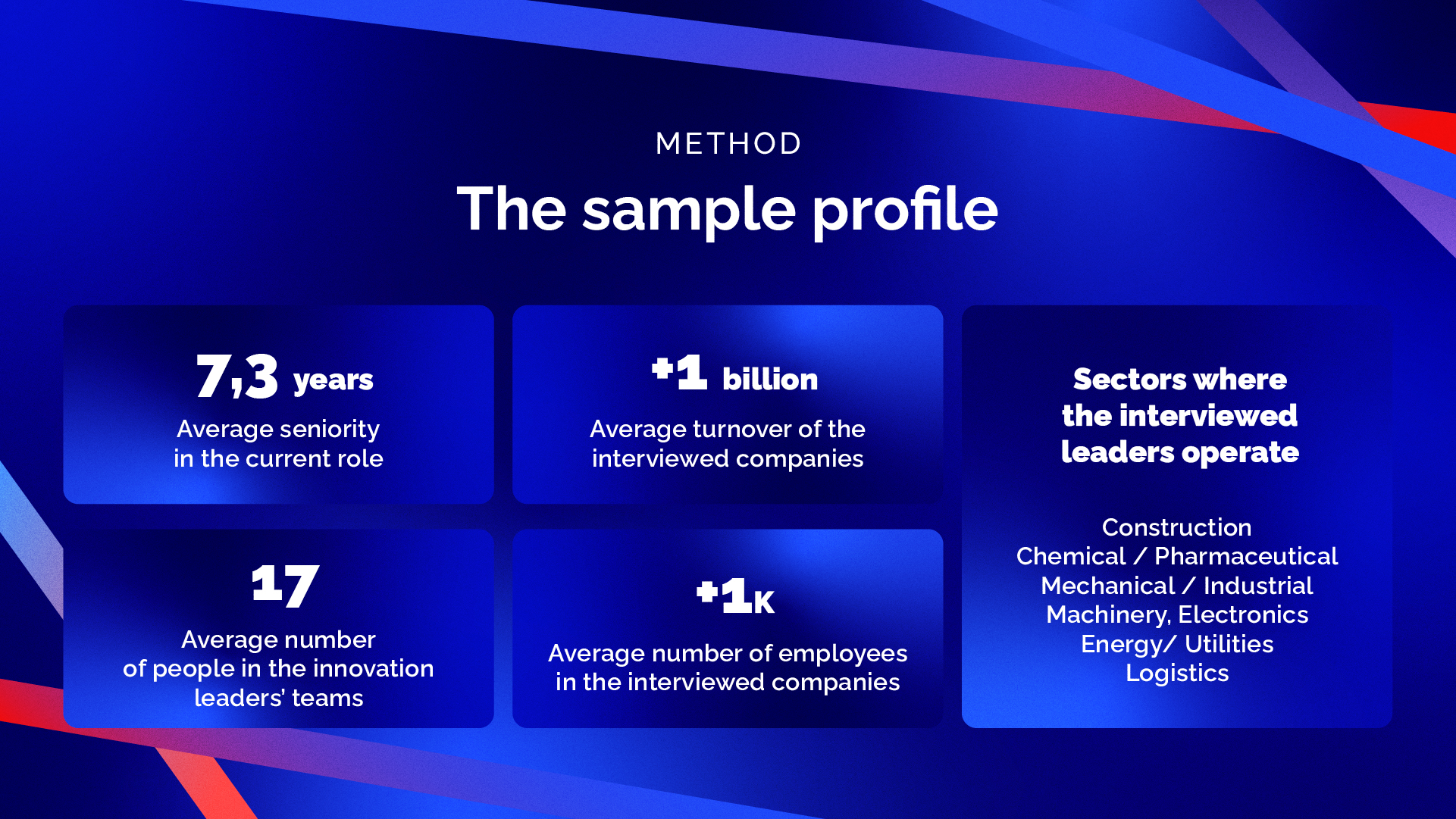
A research project explored this evolution in the Italian industrial context through qualitative interviews and quantitative surveys with technology leaders. The study examined transformation dimensions and identified trajectories shaping the future of this pivotal role.
IMPACT
The project maps three core tensions and four transformation trajectories facing technology leaders, identifying eight distinct innovation leader personas. These elements help increase awareness of today's changing context and open strategic reflections on the future of IT governance, innovation ownership, and competency development.

The objectives of this discovery journey are diverse:
- Explore the transformation: analyze the dimensions of transformation impacting technology leaders, moving from IT management to strategic guidance.
- Map the change: outline the key trajectories of change that are impacting the present and will define the future of the technology leader role.
- Gather authentic experiences: uncover how technology leaders in the Italian industrial context are navigating this evolution to balance efficiency, innovation, and people management.
- Open a conversation on the role’s future: The research serves not as a static reference tool, but as a starting point for active dialogue among technology leaders from diverse backgrounds and organizations, brought to life through a dedicated event featuring testimonials and in-depth discussions.
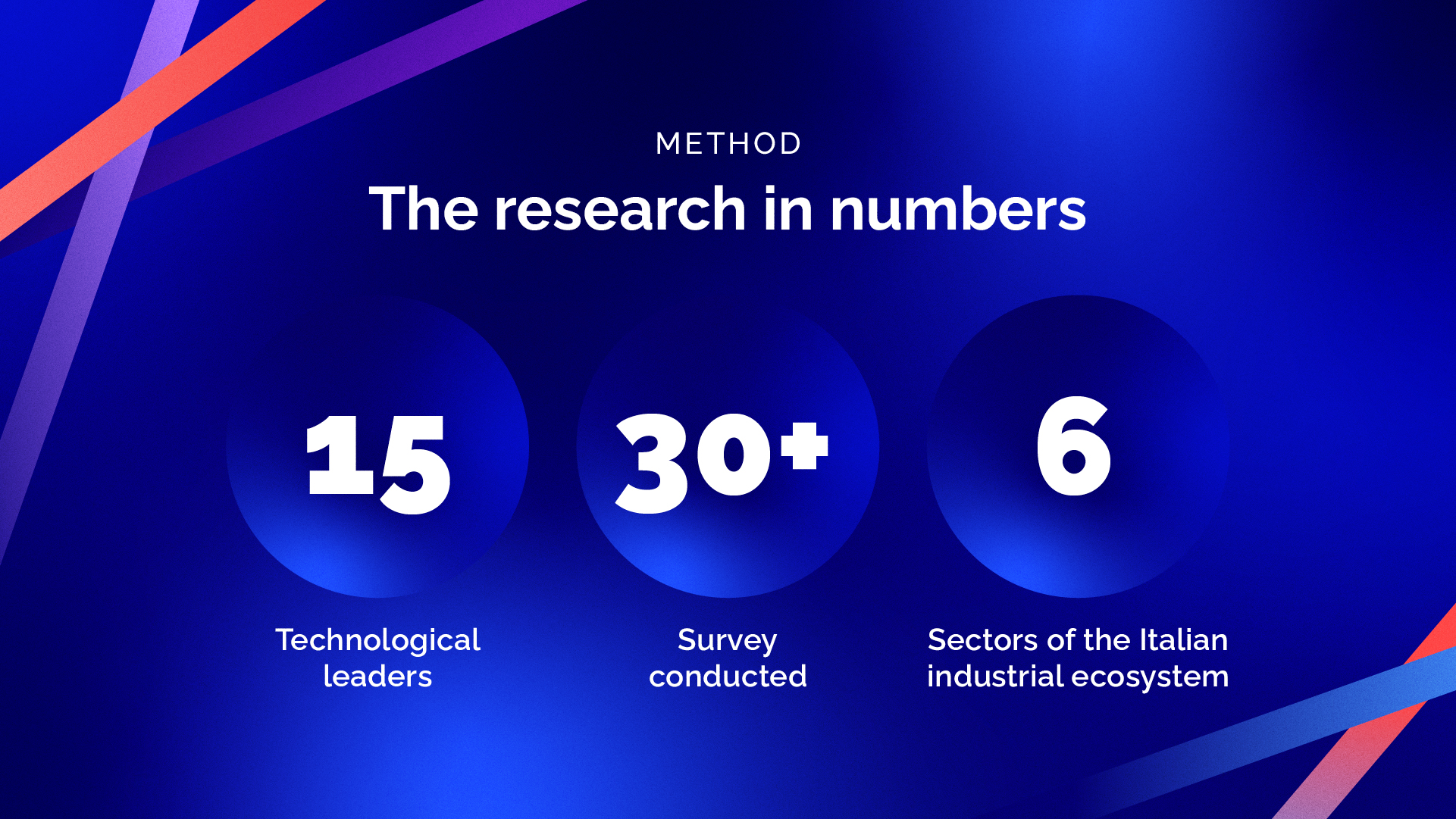
To achieve these objectives, a broad qualitative-quantitative survey was activated to frame the problem, identify the main barriers, analyze current HR and IT practices, and identify innovative approaches for new technological leadership models.
Between analysis and storytelling
The “The many faces of the technology leader” project was developed as a journey intertwining multiple core areas of action. We began with contextual research on the state of the art of technology leadership evolution through trend analysis, specialized literature, and global reports. We then conducted a survey with leaders alongside qualitative interviews to analyze the core challenges, the main tensions characterizing the different leaders’ attitude against key parameters, and four phenomena defining the role.
With these insights, we built, in collaboration with Jakala Industrial & B2B Practice, materials to describe the phenomenon and a dedicated event to create a space for shared reflection and dialogue on the Italian industrial sector context and the role of those who hold the technology mandate within it.
The areas of action
RESEARCH & CONTEXT ANALYSIS: KEY FACTS
The research project mapped the transformation of the Technology Leader role across three core areas, identifying key dynamics that define the position in the industrial context:
3 core tensions: these shape the technology leader role, balancing technical depth with cross-functional breadth, maintaining efficiency or driving transformation, and leading innovation or supporting it.
4 phenomena of change: key dynamics that characterize the evolving landscape for technology leadership.
- Technology Leader, but which one?
The technology leader is gaining a new strategic centrality, but often with different mandates or responsibilities distributed across multiple individuals. - When AI makes everyone feel like a technology leader:
AI is breaking down barriers that, until yesterday, seemed to reserve technology for an elite playground. - Technology, business, or people?
Technical skills are increasingly intertwined with business and people management. However, the degree of this integration depends on the company. - The (difficult) time for innovation
A paradox: those also defined as innovation leaders can end up dedicating over 80% of their time to ordinary activities. To defend this precious time, tech teams implement diverse strategies, ranging from relying on trusted vendors to disambiguating roles between “business as usual” and “innovation.”
3 dimensions for mapping the “tech leadership personas”
- Ownership – From support to guidance: distinguishes between those who enable projects and those who directly drive the transformation. It measures the shift from “making things work” to “changing how things work” and the degree of protagonism in innovation.
- Orientation – From stability to experimentation: contrasts those more oriented towards IT governance (stability and security) with those who have a drive towards innovation and experimentation. It reflects the evolution from efficiency guardian to catalyst for change.
- Approach – Self vs. outsourcing: distinguishes between those who develop innovation internally (self-innovator) and those who rely on external partners (outsourcer), thereby identifying the operational model of transformation.
STORYTELLING AND EVENT EXPERIENCE
Rather than a traditional report, we created a multilayered experience through:
- A keynote speech presenting the research findings and strategic implications.
- A graphic paper map format designed for exploration and discovery of the research.
A dedicated event, produced by Jakala, conducted by the Industrial & B2B Practice, featuring industry leaders and exceptional guests – Lamborghini Head of IT, Data & AI, Microsoft Azure GTM Director EMEA, and Mapei Business Application Manager – for in-depth discussions and testimonials.
The four directions of research
This research reveals that technology leadership is no longer a purely technical function but is transforming into a strategic competence that engages all organizational leaders. The new paradigm demands a business & people partner who skillfully balances IT governance with the drive for innovation.
To navigate this complex landscape, our research approached these challenges by identifying four critical transformation trajectories that must shape the technology function’s agenda:
- From operational to catalytic: moving from “making things work” to “changing how things work.” The technology leader evolves from an executor to a catalyst for transformation.
- Translating technology into business language: The ability to mediate between technical knowledge and strategy becomes a key leadership competency, communicating potential benefits and technological limits.
- Navigating specialization and experimentation: The speed of change demands cross-functional capabilities and a new accelerated approach to experimentation—embracing agile, iterative, and “imperfect” methods.
- Becoming the company’s technological compass: With automation and AI advancing, the technology leader becomes the reference point for strategic decisions on what is possible, what is worthwhile, and, crucially, what should not be done.
The significance of these strategic directions becomes even more apparent when examining the key metrics revealed by our research. The following data represents some highlights that reveal the current state of technology leadership in Italy.

were selected by at least one respondent as the technology leader’s key objective
THE EVOLVING MANDATE
The role of the technology leader is highly contextual and fragmented across multiple responsibilities, demonstrating no single shared priority for the mandate.

of respondents noted raised expectations regarding new or ongoing projects due to AI
THE AI EFFECT
While the C-Suite is pushing for AI, its strategic integration is still in its nascent stages, with 48% of leaders stating adoption is in the study or testing phase.

of responses indicate “Leadership and change management” as the most important competency for the technology leader of the future
FUTURE COMPETENCIES
Technical skills alone are no longer sufficient; the ability to lead organizational change and manage people is now paramount.

of respondents dedicate up to three-quarters of their time to ordinary management activities
THE TIME CONSTRAINT
The paradox remains: those defined as innovation leaders struggle to find time for strategic, future-oriented activities, with 64% citing this time constraint as the main barrier to innovation.
INVEST IN TRAINING AND SPECIALIZED TEAMS
Facing time constraints, some companies invest in training specialized young talent for ad-hoc responses or create small hybrid teams, often led by tech figures in PM roles, to tackle complex topics like AI, ensuring knowledge retention and focused expertise.
RELYING ON TRUSTED EXTERNAL PARTNERS
When time for innovation scouting is limited, some companies resort to external solutions. This includes entrusting innovation to a reliable technological partner for guidance or using external consulting and outsourcing as a lifeline, often managed by a strong internal Project Manager and defined practices.
Discover the Research
The significance of these strategic directions becomes even more apparent when examining the key metrics revealed by our research. The following data represents just some highlights that reveal the current state of people management in Italy.
📥 To discover the complete research and gain a comprehensive understanding of all eight innovation leader personas, we invite you to discover the full report!
Report document is in italian.
Innovation in the industrial sector depends on technology leaders. The complexity of IT governance, rapid AI adoption, and the need to turn technology into business value require a new mindset. MAIZE and Jakala’s expertise helps organizations understand how technology, leadership, and culture interact, offering a forward-looking view of the tech function’s evolution.