To do otherwise
Autonomy lives where we resist what feels automatic

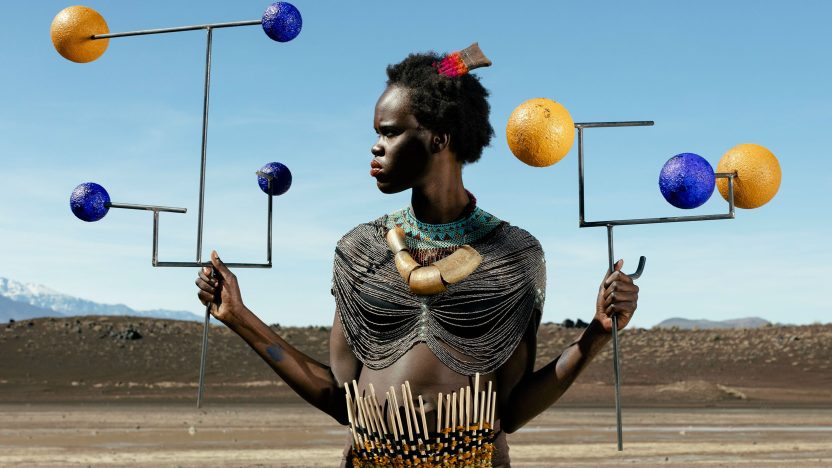
Photo by Daesung Lee
It is said that when Alexander the Great met Diogenes of Sinope, also known as the Cynic, he asked if there was anything he could do for him.
Diogenes, who was lying naked in the sun, replied, “Yes, move aside; you’re casting a shadow over me.” (Plutarch literally wrote: “Step aside from my sun.”)
Diogenes had a fierce and radical idea of autonomy. He not only did without power, but also refused its protection whenever it implied dependence. The philosopher neither demanded rights nor asked for space. He simply remained within the boundaries of his self-sufficiency. He could be seen as a symbol of freedom born from refusing advantages that come at the price of subordination.
Nearly two thousand years later, at the height of industrial modernity, we encounter another concept of autonomy in the form of the Paris Commune. Here, it is not individuals withdrawing from the world, but rather an entire people attempting self-government. They established institutions without leaders and laws without intermediaries — a city “ruled” by its residents. For a few weeks, the European capital became a laboratory — a violent one, too — of a new kind of politics: horizontal and participatory. It was a shared freedom, still unripe but alive.
More recently, in a far more fragile context, this concept has taken on new forms. In the Rojava region of northeastern Syria, which has been under siege in an endless war, a collective experiment in autonomy emerged in 2021. This experiment includes direct democracy through popular assemblies, gender equality enshrined in law, coexistence among ethnic groups, ecological awareness, and a rejection of centralized state authority. Here, autonomy is not a theory, but a necessity.
While Diogenes embodied freedom through renunciation and the Commune through collective construction, Rojava represents freedom as organized resistance. Three extremes. Three archetypes. Somewhere between them, the question ricochets back to us like a pinball through time: What does it mean to be autonomous in a world that offers us everything but rarely asks us to truly choose? There was a time — perhaps imaginary, mythical, or literary — when autonomy was an act of strength. A declaration of intent.
“I give myself the law,” said the Kantian individual, the Enlightenment citizen, and the disobedient romantic.
What about today? Among push notifications, assisted navigation, algorithmic suggestions, and influencer culture — where is autonomy hiding?
Byung-Chul Han describes a society of psychopolitics, in which coercion is internalized rather than imposed from above. Rather than obeying explicit commands, we now obey invisible flows — intuitive interfaces that are unchallengeable by design. Every day, we “choose” — or so we think — what to watch, read, or buy. However, these options have already been chosen for us.
In Atlas of AI, Kate Crawford also warns us that, in her view, artificial intelligence does not expand the possibilities of human thought. Rather, she argues, it automates what has already happened. The illusion of neutrality conceals a deeply human infrastructure built on selective data, opaque models, and economic choices. Every so-called “intelligent” system is, in truth, a machine of orientation, guiding us through an increasingly predictable — and, in a sense, automatic — world.
A contrast emerges that is more relevant today than ever before: automatic refers to actions that are performed without thought, while autonomous refers to actions that are preceded by thought. Automation makes us faster and more efficient. Algorithms propose, anticipate, and accelerate. However, freedom and autonomy unfold elsewhere — likely at the opposite pole — where we can still refuse to conform, and resist the soft, “affectionate” rules of the platforms. More than doing things on our own, autonomy is now about doing things differently — a reflective gesture that draws not from any feed or stream, but from the quiet part of ourselves that still knows how to resist automatic seduction. It’s like reading a book that no app has suggested. Or acting by chance, without a goal, and letting no shadow be cast over us.