The author, that obviously doesn’t exist
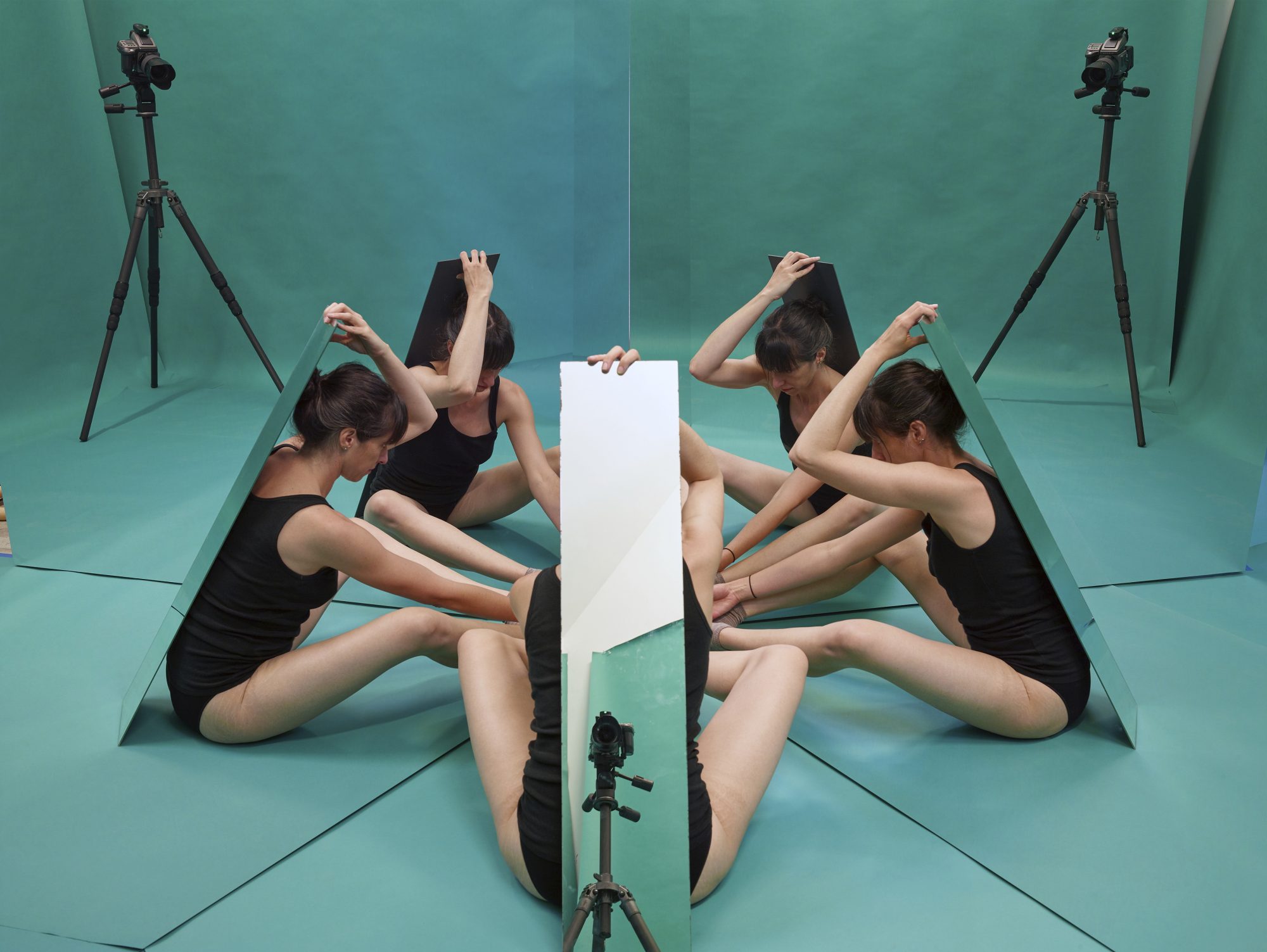
The self, endlessly reflected, finds its true form only by dissolving into a chorus
Long before I became a published author, there was a time in my life as a writer when I thought I’d become a journalist. Jotting down what I observed and witnessed, and trying to convey it convincingly, felt natural to me — spontaneous and automatic. I didn’t yet know that “convincing” meant “more believable than true” and that “more believable than true” often meant “made up.”
Whenever I was asked about the difference between me as an author and me as a storyteller, I was very confused because instead of reflecting on this distinction and its definition, I spent my time choosing words, adjusting syntax, and finding the right flow. This toil made me feel that what I was recounting had a glimmer of authenticity. The subject of the story was irrelevant. One day, my mother sent me a message that read, “I found your sunglasses under a bed of leaves.” At first, I thought it sounded like a poem. Then I realized, “That’s where my sunglasses were.” Another time when my landlady called to raise the rent, she said in a pouting voice that I was like a granddaughter to her. At first, I said I accepted — because I had no choice — but then I noted that grandmothers usually give a little something rather than take money.
My goal was to make you hear the leaves crunching under the shoes of a mother – not mine, not yours, but both. Or to make your eardrums tremble with the annoying sensation of greed.
The intention is to create a make-believe world that doesn’t look fake by making careful linguistic choices, though this doesn’t always work. By the end of the process, no self remains intact, and no author is more real than their characters. Regarding the concept of the existence of authors, Giorgio Manganelli wrote in Pinocchio, A Parallel Book (Adelphi, 2002): “I have known men and women who got married at a conference celebrating an author. Some simply and hastily fornicated. Others were robbed, killed, kidnapped, tortured, complimented, applauded, murmured about, and deplored. However, in my opinion, none of this proves with certainty that the author exists. In fact, I would say that the abundance of identifying signs is suspicious, like when children are kept home from school in honor of the Fatherland or Victory, which obviously do not exist. It’s incredible how much people who have never been born can do: Romulus founded Rome, Noah built the Ark, and Robinson survived for twenty years on a desert island – with the added inconvenience of wandering among the pages and words of a large, two-volume book.”

Photo by Heather Rasmussen
I have always tried to describe phenomena in which I was involved that also seemed to be a social glue, such as the collapse of the traditional family, the normalization of non-permanent employment, the network of friendship and its non-hierarchical dynamic, marginalization, trampling the status quo through irony, illness, the impossible refusal of mortality, and storytelling as a fair practice of knowledge transmission. I used a first-person narrative that hinted at autobiography to describe these phenomena. I inevitably lied. Since we have always blended supposed reality and supposed fiction when thinking, talking, and writing about ourselves, many years ago, we found the term autofiction as a foothold. Serge Doubrovsky coined the term in 1977 in a novel entitled Fils.
I switched to the third person, declaring myself “fed up with myself,” which was also a lie because an author fed up with themselves just stops writing.
In a 1977 interview, now compiled in Ultime interviste (Il Saggiatore, 2024), Joan Didion discussed her work as a novelist and her relationship with her characters: “I think you identify with all your characters. They become your family; they are closer to you than anyone else. They move into your house and take possession of the furniture.”
At that time, Didion was not only a novelist but also the formidable journalist behind Slouching Towards Bethlehem, a collection of journalistic accounts depicting an America teetering between the dusk of the Far West myth and a room in a hippie neighborhood where a five-year-old girl is tripping on LSD. Didion is also present at dusk and in the room, acting as a witness and interpreter. In Didion, the parallel processes of identifying with characters, which is typical of the novel form, and the process of being a mediator of reality, which is typical of the reporter, merge into the character-interpreter amalgam found in The Year of Magical Thinking and Blue Nights. These cult books defy classification and offer insights into processing grief and the merciless rigor of the writing profession. In a 2003 interview, Joan Didion stated: “I don’t process anything until I’ve written it.”
The habit of viewing self-narration as a quirk of the hyper-contemporary age is spreading. Perhaps because the self is everywhere, watching us from every angle. Now more than ever, the self has become a spendable currency and a commercial category. These are not trivial matters. However, presentism can be harmful.
From major literary movements to smaller niches — from Proust to Richard Brautigan, from Tolstoy to Robert Walser, from Marina Tsvetaeva to Vitaliano Trevisan — the authorial voices we cherish most have played with and deceived us with genres such as literary autobiography, memoir, autofiction, diary, hybrid essay, and first-person reportage.
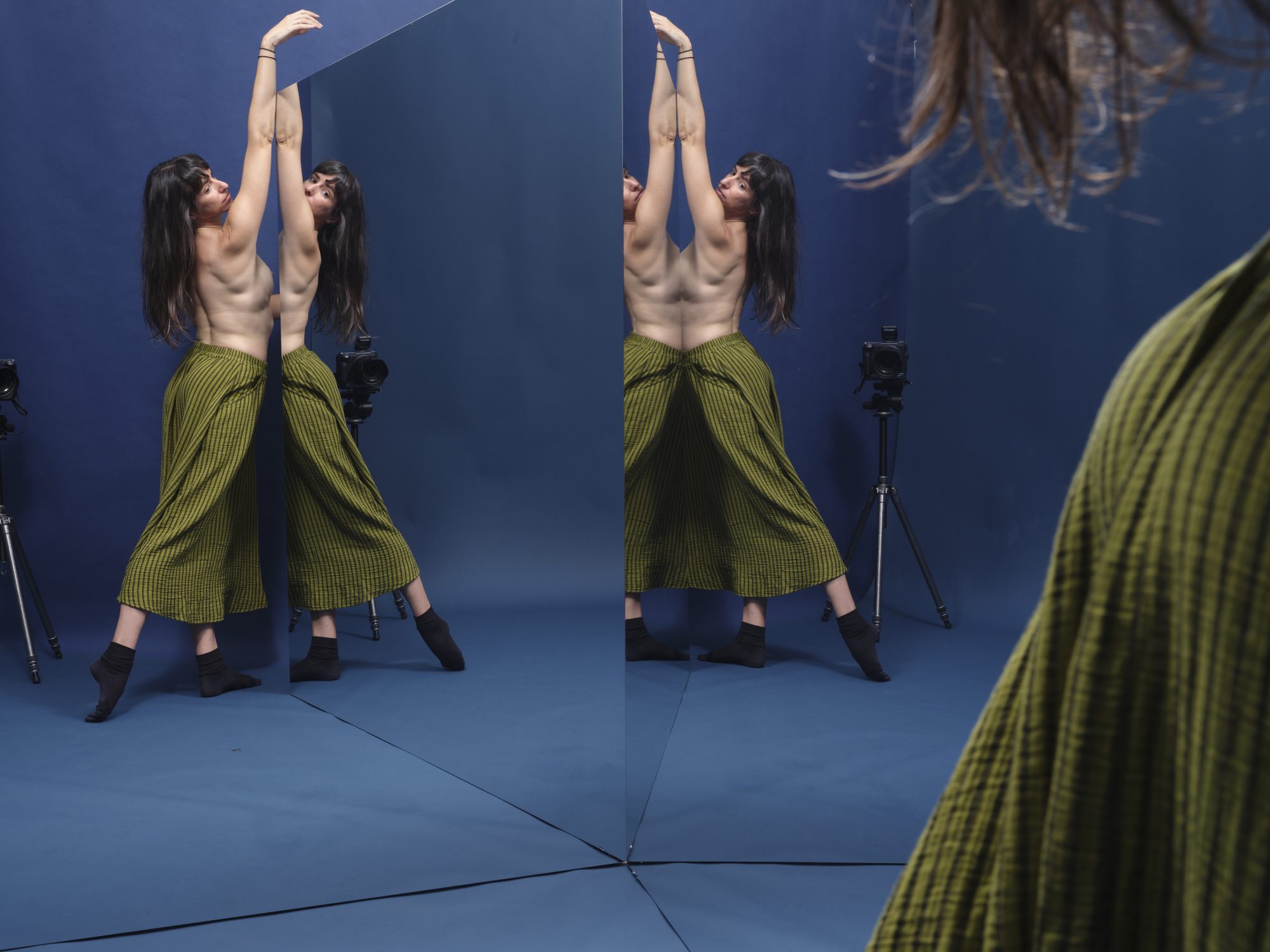
Photo by Heather Rasmussen
In the 1937 modernist classic Everybody’s Autobiography (Random House, 1937) – Gertrude Stein mocks us right from the first pages by declaring: “Anyway, autobiography is easy. Like it or not, autobiography is easy for anyone, and so this is to be everybody’s autobiography.” She makes it clear from the beginning that we are about to move to Paris with her and wander among encounters, bars, conversations, and arguments with the greatest cultural icons of the early twentieth-century avant-garde. It is a collective story conveyed by an autonomous voice.
In the preface to Cinque romanzi brevi (Einaudi, 1964), Natalia Ginzburg described how her relationship with autobiographical tension was initially conflict-ridden. She tried to escape it: “I wanted my stories, fueled purely by what I knew to be necessary and inevitable, to be projected into an impersonal world, detached from me, in which no trace of me could be seen. I had a holy terror of autobiography.” At the beginning of her career, Ginzburg was afraid of being clingy and sentimental, too feminine. She wanted to “write like a man,” not surprising given that our society has long viewed men as neutral, primal beings from whom everything else originates. Nina Berberova, born at the beginning of the 20th century, wrote in Il corsivo è mio (Adelphi, 1989), a long memoir of her life as a Russian dissident in the United States: “My mother was a child of her time, a time when education, social conditioning, and prejudice crippled women… At that time, women were educated for the utterly abstract roles of wives and mothers… They lived only to hide, conceal, and mask something alive within themselves, which was ultimately killed.”
She recounts a shared social condition, beginning with her own family, using carefully chosen language; herein, women are not defined as “oppressed” but directly as “crippled,” suggesting a type of damage that echoes the crudest physicality. The text blends diary entries, literature, and gender history. Authors work on their selves because any honest approach to literature is an attempt to understand and recognize their own writing. These attempts have repeatedly demonstrated that the boundary between fiction and autobiography is elusive, if not entirely abstract.
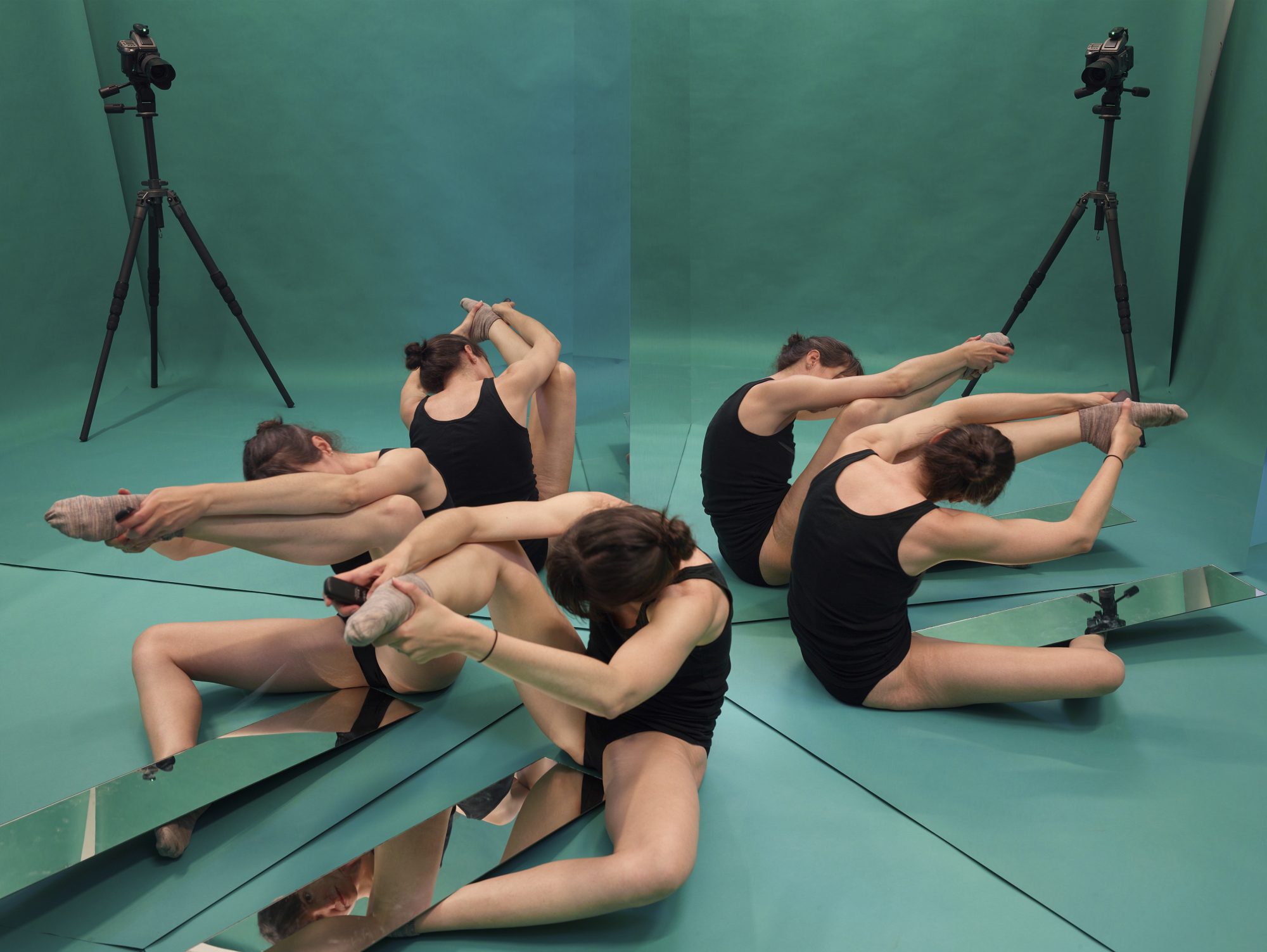
Photo by Heather Rasmussen
Clearly, a lot has changed. Self-narration has become instantaneous and widespread. We are surrounded by mirrors, and carry them in our pockets. They constantly reflect our faces and words. Our ability to express ourselves on platforms through words and images has given us an unprecedented opportunity for extended social communication. Paradoxically, this has also exposed us to the risk of forgetting others entirely and becoming engulfed by our reflection. This vast field of seized and missed possibilities is likely the material for the most current “autobiographies of everyone.” This can happen as long as we strive to understand ourselves and find our voice without succumbing to the allure of approval. To avoid suffocating from the reflections of our faces in a nightmare of loneliness, I believe the narrative of the self must evolve into the narrative of “us,” and that we must monitor the line between valuing the social dimension and sacrificing autonomy. After all, the valorization of autonomy should not spill over into pathological individualism, which would plunge us back into the aforementioned mirror. No one ever said balance was easy.
A basic principle for taking care of one’s voice is training oneself to observe rather than assert. The ever-increasing demand for assertion from the market (the market is not an abstract entity; as De Gregori said, “the market is us,” and no one should feel left out) deprives us of observation, of eclipses, and of the stories themselves. By their very nature, stories are mired in doubt; they are not a handbook-like collection of neatly packaged answers.
Throughout history, autobiographical literature has emphasized that the self cannot exist without the other, and that the individual cannot exist without society. However, perhaps its essence is that there is no narrative of the self without confrontation and conflict between the individual and society. There must be an author’s journey toward autonomy and a search for one’s voice. We fervently hope that this voice will never be assimilated and will remain distinct.