The gestures we become by
How body language quietly shapes the living architecture of our autonomy, identity and connection to others
In conversation with Olga Capirci by Marina Silvello
Language is a fundamental means of expressing who we are. It is a tool that enables us to communicate effectively, build relationships, assert our identity, claim autonomy, and make our voice heard. Through communication, we establish ourselves as individuals, forge relationships, and create shared spaces. From this perspective, sign language and gestures are fundamentally autonomous forms of language that arise from particular communication needs. They develop as creative and powerful responses to exclusion, becoming tools for asserting identity and belonging within a community.
We discussed this topic with Olga Capirci, the research director at the Institute of Cognitive Sciences and Technologies (CNR). She has studied language and communication development from a multimodal perspective for many years, focusing particularly on sign language and gestures. Together, we explored the profound connection between the body, gestures, and speech, as well as the role of communication in shaping personal and collective autonomy.
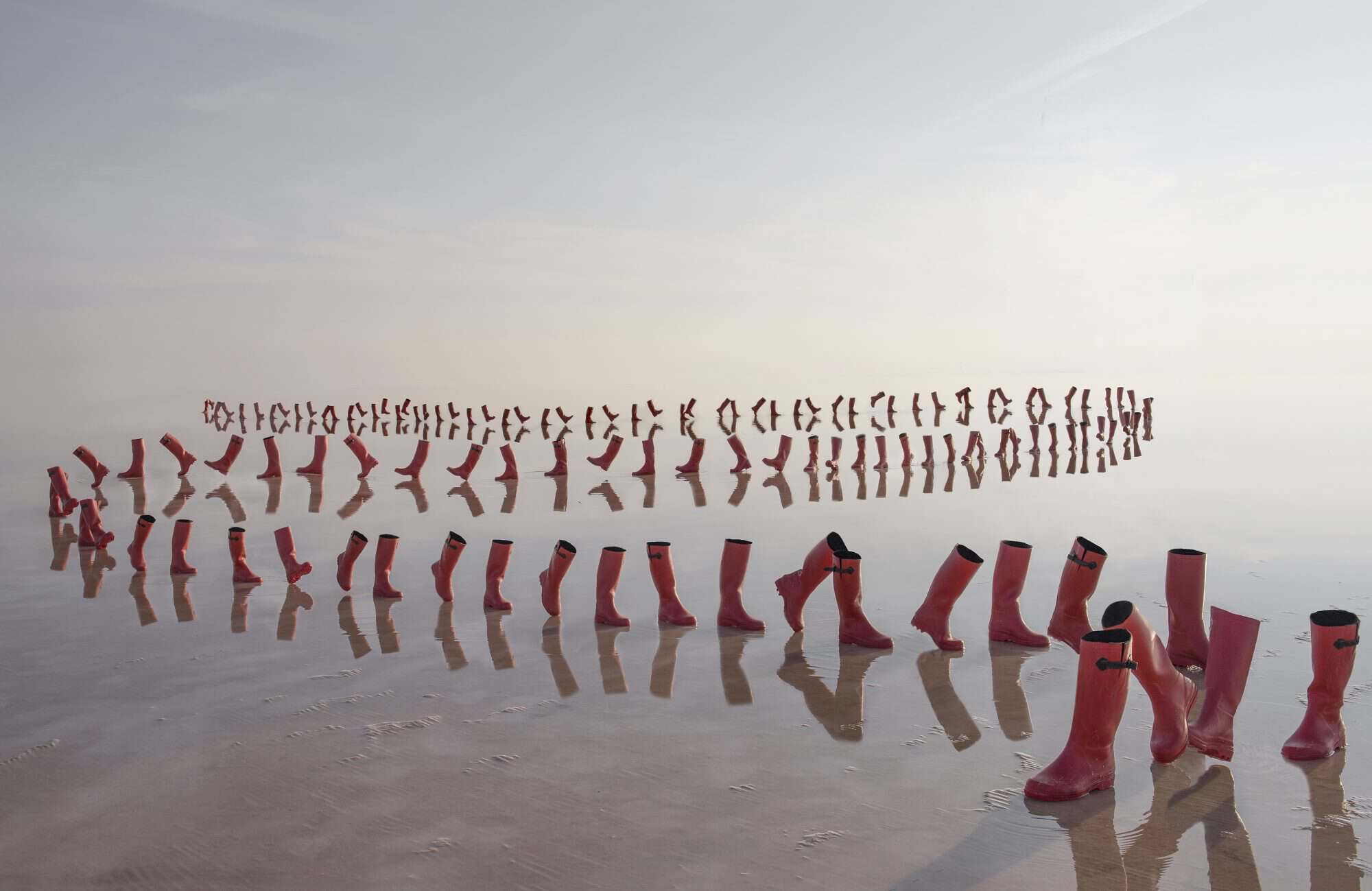
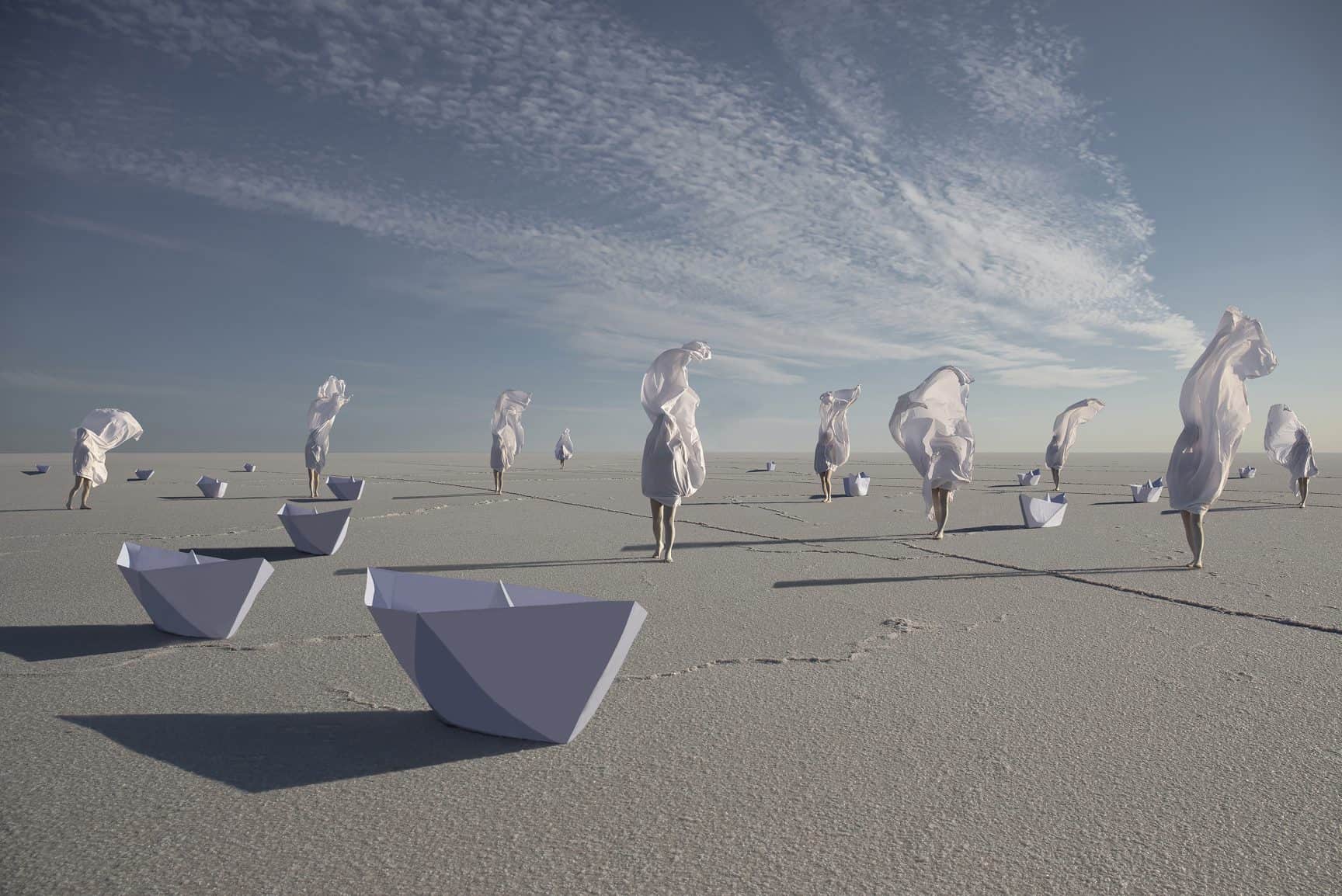
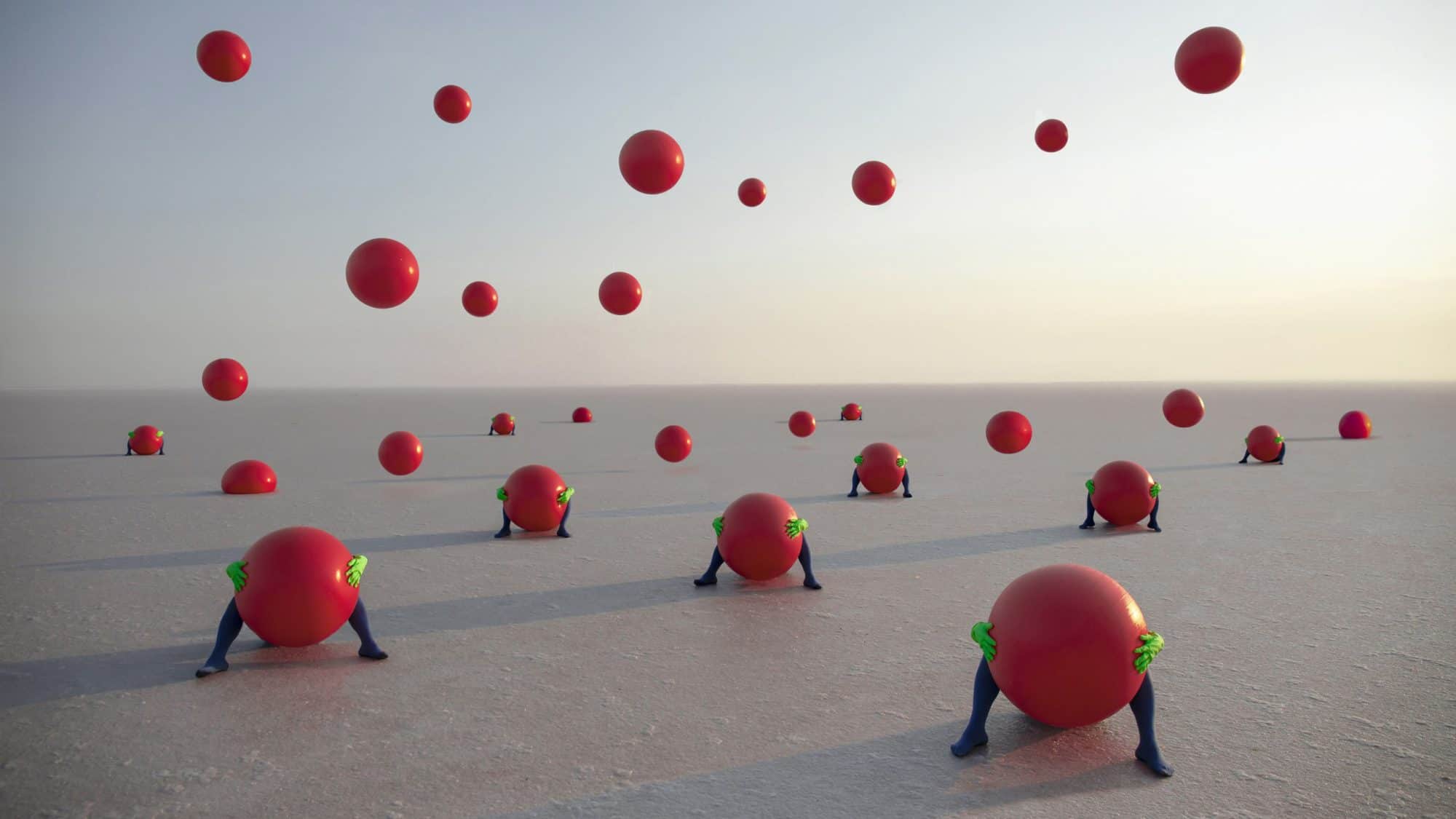
Once I Fell in Time Suspended objects, fleeting arrangements, and haunting landscapes come together in Once I Fell in Time — a meditative journey into forgotten memories and displaced identities. Through ephemeral land installations, May Parlar transforms the act of remembering into an art of presence and impermanence.
Marina Silvello: Rather than being merely an adjunct to language, gestures are an original and autonomous form of communication. Could we argue that gestures are an embodied expression of agency, especially in children, and that the body is the initial seat of linguistic autonomy?
Olga Capirci: I often begin my talks with this sentence: “We are born as a body within a body.” Our first sensations are those of intimate physical contact, rhythm, and movement.
We are organisms that develop synergistically in relation to one another. In 1967, Jean Piaget, the founder of modern developmental psychology, wrote: “At birth, all forms of cognition are expressed through action, which constitutes the matrix from which subsequent cognitive strategies originate.”
This view is based on theories that emerged in the late twentieth century, known as the Embodied Mind Thesis, more commonly referred to as Embodied Cognition (Barsalou, 2008; Gallagher, 2005). This approach argues that the body plays a fundamental role in communicating mental states and intentions because we are situated in relation to our environment, context, and physicality. Human social cognition is a form of action and interaction, a socially coordinated way of acting with others.
The bodily element that best represents this communicative boundary is gesture. There are different types of gestures, including hand gestures, facial expressions, and body postures. We use them to express meaning, communicate with others, and understand one another.
Regardless of the linguistic input methods to which they are exposed, all children use gestures to communicate. Research on language development in early childhood has demonstrated that verbal and gestural modes of communication develop in tandem and are closely intertwined.
Before the age of 12 months, children actively participate in communicative contexts through behaviors that precede verbal communication. These behaviors include performative and deictic gestures such as giving, showing, requesting, and pointing. These gestures help children and adults share their attention on objects or events in the child’s environment.
The mechanisms underlying attention sharing are crucial for language acquisition because they facilitate referential disambiguation. Between 12 and 18 months of age, gestures become more complex. During this period, children develop the fine motor skills necessary to grasp and manipulate objects in increasingly sophisticated ways. These gestures “represent” familiar actions or objects (e.g., bringing the hand to the mouth to indicate “food”).
“Representative” gestures serve the same purpose for children as words do. Like words, they are used to name, describe, or request something. During this “bimodal” period, there does not seem to be a clear distinction between gestures and words. Children’s initial communication repertoire includes an equal number of vocal and gestural elements that refer to different things. From a young age, children combine gestures with facial expressions, eye direction, and vocalizations. Later, they add their first words to this repertoire.
However, this connection extends beyond childhood into adulthood. It encompasses more complex forms and emphasizes that gestures and words are part of a single communication system based on common cognitive processes. This clearly demonstrates the multimodal nature of human communication.
Language and communication encompass more than just speech. Our bodies, especially our hands, play a crucial role in expressing and interpreting meaning.
In this sense, language is a multimodal system that requires visual, motor, and auditory skills. Language is based on the pre-existing multimodal characteristics of the sensory-motor system.

PHOTO by May Parlar — Collective solitude
MS: In an age of increasingly visual and digital communication, where tools for “giving substance” to messages are multiplying — from emojis to shared images — what does this tell us about our need to embody communication? Can humans really talk at length without using their bodies?
OC: In a recent speech, Federico Albano Leoni highlighted how communication has become more visual in the last decade. Consider how widespread photos, images, and videos have become through mobile phones and computers. Often, these images render verbal or written communication redundant, if not entirely useless. For example, rather than describing an event, people commonly photograph it and share the image.
The growing popularity of emojis and other pictorial tools reflects the demand for concise writing and the necessity of global, multilingual communication. In a sense, this trend represents an unintentional return to the pictographic and ideographic forms of ancient writing. However, this trend also highlights the central role of visual elements in contemporary communication.
Additionally, these tools address a more profound need: to give substance to digital communication and make it more human and direct.
MS: Let’s talk about languages classified as “first languages.” Although we often consider sign language to be a translation of spoken language, your studies show that it is actually its own linguistic system.
OC: Our ability to use language sets us apart from all other living beings. This ability is not dependent on the acoustic-vocal channel. As Ferdinand de Saussure, the father of modern linguistics, wrote in 1916: “It is not spoken language that is natural to humans, but rather the ability to construct language.” Therefore, language can be expressed both acoustically and visually. Deaf people have always used visual and gestural means to communicate. This need has given rise to sign languages, which are natural languages with histories similar to those of spoken languages.
Since ancient times, it has been known that deaf people communicate using sign language. Over the centuries, sign language has attracted the interest of philosophers, scientists, and educators. Plato was one of the first to document the use of sign language. In a passage from Cratylus, he considered deaf people’s communication to be a model of natural expression.
The terms “language” and “signs” were first used in an 1858 text by the deaf Italian Giacomo Carbonieri. However, the publication of Sign Language Structure by American anthropologist and linguist William Stokoe in 1960 marked the beginning of linguistic and semiotic analysis of sign languages. Using contemporary linguistic analysis methods, this work revealed the linguistic status of sign languages as a code distinct from and autonomous of vocal languages for the first time. Following the publication of this work, sign languages began to be studied and systematically described around the world.
There are as many sign languages in the world as there are communities that use them. Ethnologue currently lists 150 sign languages, each of which is created and evolves thanks to its community of users. These languages are deeply rooted in their respective cultures.
In Italy, the Institute of Cognitive Sciences and Technologies of the National Research Council (CNR) was the first public body to study Italian Sign Language (LIS). As early as the 1980s, the CNR demonstrated that LIS possesses all the structural characteristics of a linguistic system. In 2021, the Italian state finally recognized and protected LIS.

PHOTO by May Parlar
MS: How does growing up with a sign language as your first language impact cognitive and communicative development?
OC: The brain processes sign languages as real languages and acquires them as such. As with spoken languages, the circuits in the brain areas dedicated to language become active. This is a strong indication that sign languages are processed by the brain as real languages, completely independently of their external form.
This kind of evidence has led to the realization that bimodal bilingualism, or the coexistence of one or more spoken languages and one or more sign languages, is just as desirable as traditional bilingualism involving spoken languages. Consider Italian and English, for example.
Scientific research now indicates that bilingualism involving both sign and spoken languages offers deaf children significant advantages in language development, cognitive abilities, and psychological well-being. Bilingualism also promotes inclusion and participation.
Supporting and promoting sign language means supporting bilingualism and biculturalism. Bilingualism involving a sign language and a spoken language allows deaf children and young adults to engage with two cultures: the hearing majority’s culture, which relies on spoken language, and the deaf community’s culture, which utilizes sign language.
MS: An alternative language is a way of existing in the world. Like certain spontaneous gestural systems, sign language seems to be a functional response to expressive needs and a genuine tool for constructing identity. Could you explain how these languages contribute to the formation of identity, sense of belonging, and shared worlds?
OC: Recognizing sign languages as autonomous linguistic systems has compelled us to reevaluate our understanding of language and language skills. It has become evident that gestures can perform functions that were once thought to be the exclusive domain of spoken languages under certain conditions.
Because sign languages are visual and gestural, iconicity emerges in signing material at the sub-lexical level. Practices, actions, and interactions transform into signing material and enter the language while maintaining an iconic link with the referent. Iconicity emerges at various structural levels of sign language, significantly contributing to the creation, organization, and systematization of signifiers.
The concept of language as an embodied phenomenon suggests that signs related to emotions are the ultimate expression of the body’s role in language. When we observe a sign related to an emotion, we see the selection of a specific physiological reaction or metaphor linked to the sensation the body experiences when feeling that emotion. For instance, happiness is expressed through a smile and raised eyebrows. Studies have demonstrated the importance of this type of metaphorical mapping in Italian Sign Language (LIS). These studies have revealed that the chest position is used more frequently than other positions in signs referring to emotions. This suggests that the LIS lexicon conceptualizes the chest as a “container” for emotions (Proietti, Di Renzo, & Bonsignori, 2019; Bonsignori & Proietti, 2020).
Like spoken languages, sign languages provide a sense of cultural identity and empower individuals to participate in their culture. In a society that accepts and recognizes the dignity of sign language on an equal footing with other minority languages, it can become a fundamental means of education. This could encourage hearing people to learn sign language.
Currently, the sign language community is a non-territorial linguistic minority. It is a widespread community because its members recognize the linguistic nature of their language. In recent years, they have sought to describe how their language works and define a standard, moving beyond the absence of a written form.
Language is not merely a means of communicating with others. It also plays a fundamental role in developing social skills, emotional and cognitive abilities, and constructing knowledge. In 1930 Antonio Gramsci wrote in Quaderni dal carcere (Prison Notebooks), “every language is an integral conception of the world and not just an outer garment that functions indifferently as a form for any content.”
The relationship between language and identity defines a culture’s distinctive features because a community’s identity is inextricably linked to its language. Language is the gateway to understanding the world and its various perspectives. As an instrument of identity, language constantly evolves and changes. Through the incorporation of new elements, it continually corrects and enhances itself, making it a flowing, somewhat slippery, and elusive tool. In this sense, language is a fluid identity because it is in motion and enriched by contamination. Thus, it can increase its understanding of the world.
Based on de Saussure’s (1967[1922]) social definition of the linguistic sign, Italian linguist Tullio De Mauro proposed a socio-semiotic definition of language during the 1970s and 1980s. He summarized this definition in his later studies as follows:
“A language is not just a semiotic system. Or to put it better, a language is a semiotic system that includes functional and formally relevant elements, the mass of speakers, the time, as well as the network of socio-pragmatic, historical-cultural relationships in which […] it is located and evolves.” (De Mauro, 2018: 113). (De Mauro, 2018: 113).
De Mauro’s definition of language did not stem from an abstract characterization of language as a product. Instead, it centered on the cognitive, sensory-motor, social, and cultural behaviors that facilitate language use and acquisition. Based on this, he explained language’s properties. In his first essay on semantics, he wrote, “It is wrong to say that words or phrases mean something. In reality, only human beings mean something through phrases and words” (De Mauro, 1965: 31–32).
Around the same time that De Mauro was developing his theoretical definition of language, Virginia Volterra and her team of deaf and hearing researchers conducted the first scientific analysis of Italian Sign Language at the historic Tommaso Silvestri Institute for the Deaf in Via Nomentana, not far from De Mauro’s studio in Rome. This research involved deaf individuals. Volterra recounts that when she first approached the Roman deaf community in the 1970s, they denied having a language when questioned because their metalinguistic awareness was so limited. Twenty years later, however, that same language was being taught and used on television and was the subject of passionate discussion. The deaf community had developed a deep metalinguistic awareness. This is a concrete example of how a living language is constructed over time through practice and shared reflection, becoming a tool for identity and belonging.